.svg)
.svg)
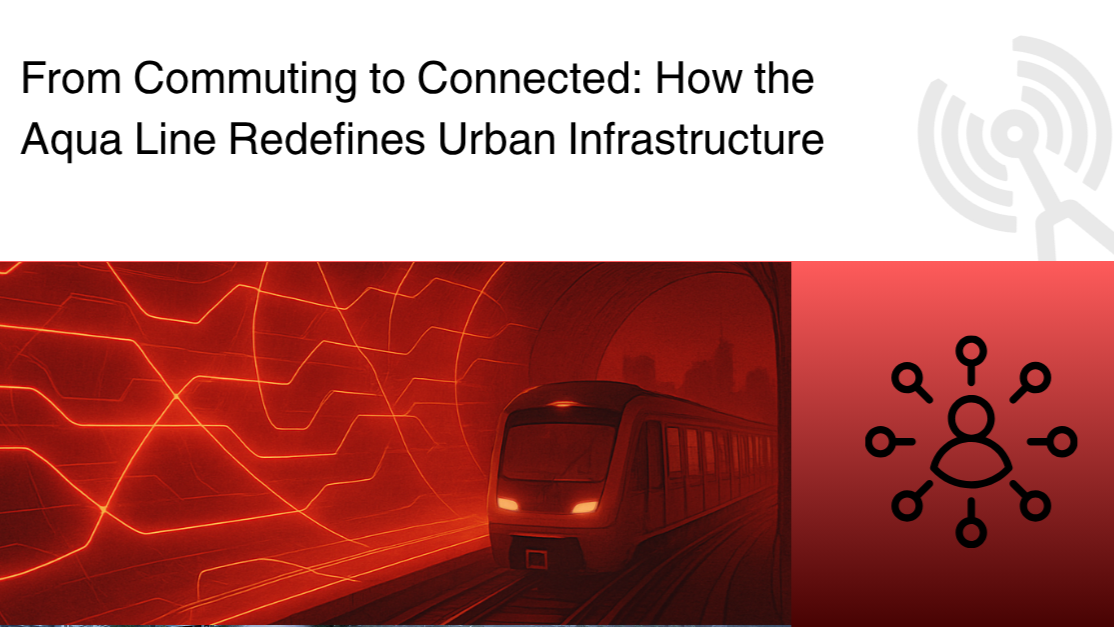
Welcome to this week’s Shaurrya Article of the Week. Today, we’re turning the spotlight on a pivotal conversation: how digital infrastructure is becoming as essential as power & water — and how the work on the Mumbai Metro Aqua Line is proof of that.
In the guest article featured on TechARC, Salil Ahuja walks us through why the neutral-host model isn’t just a technical choice—it’s a civic imperative. Urban mobility isn’t simply about moving people from A to B; it’s about keeping them connected, informed, safe, and empowered while they move. By integrating a shared connectivity backbone on the Aqua Line, Shaurrya reiterates its commitment to reimagining connectivity as a foundational utility.
- A neutral-host model for metro infrastructure can eliminate connectivity blackspots, meaning no more commuter left offline.
- It reduces deployment redundancies—tele-operators and infrastructure vendors no longer work in silos, saving cost, time and energy.
- The model ensures seamless digital access for every commuter, regardless of operator—an equitable connectivity ecosystem.
- Designing connectivity at the infrastructure stage of a project (rather than as an after-thought) is vital to achieving the broader Smart City vision for India.
- Shaurrya’s role in facilitating this through strategy, partnerships and infrastructure execution places the organisation at the frontier of next-gen urban planning.
In the era of digital India, our urban mobility systems must evolve—not just to move better, but to connect smarter. This article reflects Shaurrya’s vision: that connectivity is not a luxury, but a core civic infrastructure. Read the full piece to explore how metro connectivity is evolving—and how we’re shaping that evolution together.